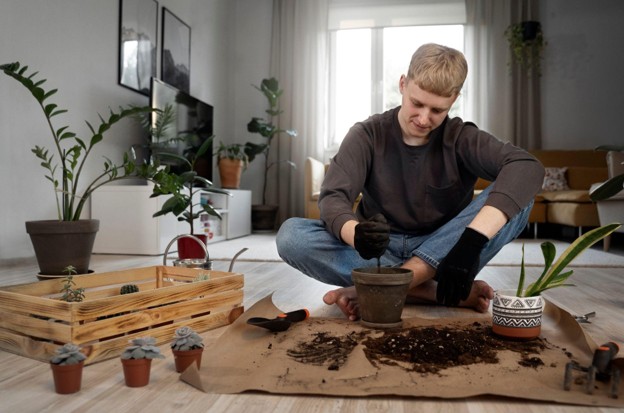
A productive garden begins below the surface, and Tim Kealy provides a useful context for exploring why healthy soil deserves attention before seeds or young plants ever go into the ground. Home gardeners often focus first on choosing vegetables, deciding where to plant, or planning a watering schedule. Those decisions matter, but the condition of the soil influences whether roots can access water, nutrients, air, and the biological activity they need to develop successfully.
Soil is much more than material that holds a plant upright. The USDA Natural Resources Conservation Service describes healthy soil as a living ecosystem containing bacteria, fungi, and other organisms that contribute to nutrient cycling, water regulation, and plant support. For home gardeners, learning to care for that ecosystem can create stronger growing conditions from one season to the next.
Good Gardening Starts Below the Surface
Plants depend on their roots for water and nutrients, making the environment surrounding those roots especially important.
Healthy garden soil needs a useful balance between the following:
- Water retention
- Drainage
- Air movement
- Organic matter
- Nutrient availability
- Biological activity
Soil that becomes heavily compacted can make it difficult for roots to spread. At the other extreme, soil that drains too quickly may struggle to retain enough moisture for plants.
The goal is not necessarily to create “perfect” soil immediately. Home gardeners can instead learn what they already have and gradually improve its condition.
Understanding Soil Structure Makes Gardening Easier
Soil structure describes the way individual soil particles combine into larger aggregates.
Good structure creates spaces that allow water and air to move through the soil while giving roots room to expand. NRCS notes that improving soil structure can increase water infiltration and reduce runoff.
Gardeners can begin by observing their soil after watering or rainfall.
Does water disappear almost immediately? Does it remain on the surface for a long time? Does the ground become extremely hard after drying?
These simple observations can provide clues about how soil behaves and where improvements may be helpful.
Compost Can Improve Garden Soil
One of the most accessible tools for improving home garden soil is compost.
Compost consists of decomposed organic materials that can be incorporated into or applied to garden soil. USDA Agricultural Research Service guidance notes that compost can improve soil structure and water-holding capacity while providing nutrients for plants and soil microbes.
For home gardeners, compost may come from commercially prepared products or properly managed household composting systems.
Common compostable garden and household materials can include plant residues and appropriate kitchen scraps. Over time, decomposition transforms organic material into something that can contribute to healthier soil.
Adding compost is not necessarily a one-time task. Soil development is gradual, and regular additions of organic matter can help maintain favorable growing conditions.
Organic Matter Has Several Important Roles
Organic matter is valuable because it influences multiple soil characteristics at once.
According to NRCS, increased organic matter can improve soil structure, water infiltration, nutrient storage, and biological activity.
This is particularly useful in a home garden where plants may be grown intensively within a relatively small area.
Organic matter helps create an environment that supports both roots and soil organisms. Rather than thinking only about feeding individual plants, gardeners can focus on maintaining the broader soil system those plants depend upon.
That shift in perspective can encourage more sustainable gardening habits.
Soil Is Full of Living Organisms
Healthy soil contains an active community of organisms, many of which are too small to see.
Bacteria, fungi, and other microorganisms participate in processes that break down organic material and cycle nutrients. Larger organisms also contribute to the soil environment.
USDA guidance emphasizes that soil biology is important to decomposition, nutrient availability, and plant health.
For gardeners, this means soil should not be treated as an inert substance that simply needs fertilizer added whenever plants appear weak.
Supporting soil life through organic matter and sensible management can help create healthier conditions naturally.
Disturbing Soil Less Can Protect Its Structure
Digging and turning soil may sometimes be necessary when establishing or maintaining a garden, but more disturbance is not automatically better.
NRCS identifies minimizing disturbance as one of its central soil-health principles. Excessive tillage can damage soil structure, reduce organic matter, and interfere with the habitat of soil organisms.
Home gardeners can apply the basic principle by avoiding unnecessary digging.
Instead of repeatedly turning an entire bed, gardeners may be able to disturb only the areas needed for planting or specific improvements.
The appropriate approach depends on the garden, but understanding that soil has an existing structure can encourage more deliberate management.
Mulch Helps Protect the Soil Surface
Bare soil is exposed directly to sun, rain, and changing temperatures.
Covering the surface with suitable mulch can help protect it while also reducing moisture loss. USDA Climate Hubs recommends maintaining soil cover and identifies mulch as one option for increasing organic matter and improving water-related soil properties.
Depending on the garden, mulch materials may include:
- Shredded leaves
- Straw
- Wood-based materials
- Other appropriate organic coverings
As some organic mulches gradually decompose, they can also contribute material back to the soil.
Mulching therefore serves both an immediate protective function and, depending on the material, a longer-term soil-building role.
Healthy Soil Can Make Watering More Effective
Watering is one of the most common concerns for home gardeners, but irrigation and soil condition are closely connected.
Healthy soil with good structure and adequate organic matter can absorb and retain water more effectively. NRCS notes that functioning healthy soils generally have better water infiltration and retention, helping make water available to plants when needed.
This does not eliminate the need for appropriate watering, particularly during dry weather.
Instead, it means gardeners can improve how effectively the soil handles the water it receives.
Adding more water cannot fully compensate for severely compacted or poorly structured soil. Improving the growing environment can therefore be just as important as adjusting the watering schedule.
Soil Testing Can Replace Guesswork
Plants require nutrients, but adding products without understanding existing soil conditions can lead to unnecessary treatments.
A soil test can provide information about characteristics such as pH and nutrient levels. This gives gardeners a better foundation for deciding whether amendments are actually needed.
Testing can be particularly useful when:
- Starting a new garden
- Plants repeatedly perform poorly
- Moving into a property with unfamiliar soil
- Planning substantial soil amendments
- Growing crops with particular requirements
Rather than assuming that every struggling plant needs additional fertilizer, gardeners can investigate whether another soil condition is responsible.
Better information often leads to simpler solutions.
Healthy Soil Develops Over Time
One of the most useful lessons in gardening is patience.
Soil that has been compacted, neglected, or depleted may not transform during a single growing season. Adding organic matter, reducing unnecessary disturbance, maintaining soil cover, and growing plants can gradually improve its condition.
NRCS soil-health guidance emphasizes principles such as maintaining living roots, minimizing disturbance, maximizing soil cover, and encouraging biodiversity.
Home gardeners do not need to apply agricultural practices exactly as a farm would. The underlying principles, however, can still provide useful guidance.
Instead of treating each growing season as an isolated event, gardeners can think of soil improvement as a continuing project.
A Better Garden Does Not Always Require More Products
Gardening can sometimes appear to require a different product for every problem.
Healthy-soil practices encourage another approach: understand the growing environment first.
Before purchasing another amendment, gardeners can ask the following:
- Is the soil draining properly?
- Is it compacted?
- Does it contain enough organic matter?
- Is the surface protected?
- Could a soil test identify the actual problem?
- Am I disturbing the soil more than necessary?
These questions can help identify underlying conditions rather than simply responding to visible symptoms.
The result may be a garden that becomes easier to manage as the soil improves.
Final Thoughts
Healthy soil is the foundation of a successful home garden because every plant depends on what happens beneath the surface. Good soil supports roots, stores and cycles nutrients, manages water, and provides habitat for an enormous community of living organisms.
For home gardeners, improving soil does not need to become complicated. Adding appropriate compost, maintaining organic matter, protecting the surface with mulch, avoiding unnecessary disturbance, and testing soil when useful can provide a practical starting point.
Most importantly, soil improvement rewards a long-term perspective. Instead of expecting each new plant to succeed because of fertilizers or frequent intervention, gardeners can invest attention in creating healthier growing conditions.
A thriving garden begins before the first flower opens or the first vegetable is harvested. By caring for the soil season after season, gardeners build a foundation that can support healthier plants, more productive growing spaces, and a deeper understanding of how a garden functions as a living system.