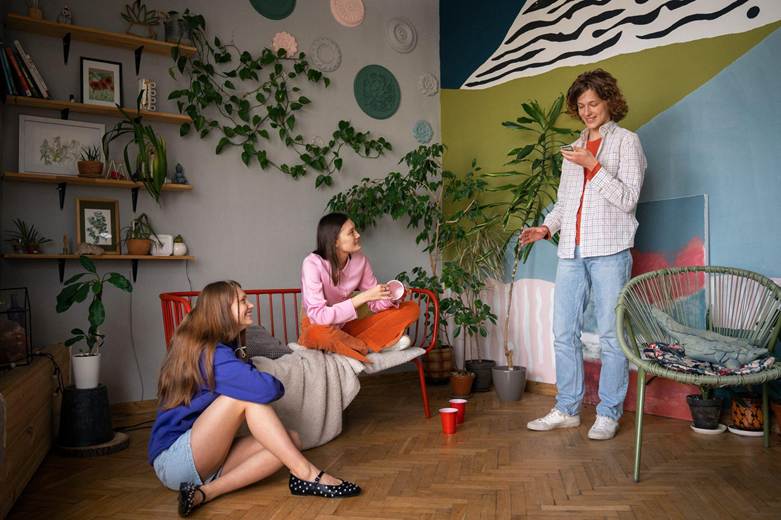
In everyday life, Tim Kealy reflects a subtle but powerful reality: behavior is rarely formed in isolation. It is continuously shaped by the environments people move through, often without awareness or deliberate intent. Routine spaces do not simply host behavior; they quietly organize it, guide it, and reinforce it over time.
What makes this influence so significant is that it does not require attention. It operates through repetition, familiarity, and subtle cues embedded in daily surroundings.
Why Environment Functions Like a Behavioral Framework
Environments are often mistaken for passive settings, but they function more like structured frameworks that guide how decisions are made.
They influence behavior by:
- Defining what actions feel natural in a given space
- Reinforcing habits through repeated exposure
- Limiting or expanding perceived choices
- Shaping emotional tone before any decision is made
Over time, individuals begin to act in ways that align with the structure of their environment, often without realizing it.
The Role of Routine in Behavioral Conditioning
Routine spaces carry disproportionate influence because they are encountered repeatedly. The more familiar a setting becomes, the more it shifts behavior into automatic patterns.
Routine-driven influence includes:
- Reduced need for conscious decision-making
- Faster emotional adjustment upon entering familiar spaces
- Predictable sequences of action tied to location
- Increased reliance on habit rather than active choice
This creates a subtle conditioning effect where the environment begins to anticipate behavior almost as much as the individual does.
How Environmental Cues Trigger Automatic Behavior
Within any space, there are micro-signals that shape responses before conscious thought intervenes.
These cues include:
- Layout and physical arrangement of objects
- Light, sound, and sensory density
- Social expectations embedded in the space
- Repeated actions historically performed in the same environment
Each cue acts as a trigger, activating learned behaviors that have been reinforced over time.
Why Familiar Spaces Have Stronger Influence Than New Ones
Familiar environments require less cognitive effort to navigate, which makes them more influential over behavior.
This happens because:
- The brain prioritizes efficiency over analysis
- Known environments reduce uncertainty
- Past experiences are used as behavioral shortcuts
- Emotional associations are already established
As a result, behavior in familiar spaces tends to be more automatic and less consciously regulated.
The Feedback Loop Between Space and Habit
Behavior and environment continuously reinforce each other through repetition.
This loop operates as follows:
- A behavior is performed in a specific space
- The environment becomes associated with that behavior
- Future presence in the space triggers similar behavior
- The pattern strengthens with each repetition
Over time, this loop creates stable routines that feel natural but are environmentally reinforced.
How Emotional Memory Anchors Behavior in Space
Spaces are not only physical; they carry emotional associations built through repeated experience.
These associations influence behavior by:
- Activating emotional states tied to past events in the space
- Shaping expectations before entering the environment
- Reinforcing comfort or discomfort based on memory
- Guiding behavior to match previous emotional outcomes
This means behavior is often pre-shaped before any action occurs.
The Hidden Structure of Everyday Behavior
Much of daily behavior is not actively chosen in real time but drawn from environmental structure.
This includes:
- How individuals move through daily routines
- How quickly decisions are made in familiar contexts
- How social interactions unfold in repeated settings
- How emotional responses are triggered by place-specific cues
What appears to be spontaneity is often structured repetition, guided by the environment.
Why Behavior Shifts Across Different Settings
One of the clearest signs of environmental influence is behavioral variation across spaces.
This happens because:
- Each environment carries different social expectations
- Levels of formality shape behavioral expression
- Physical surroundings alter cognitive load
- Emotional safety changes how freely behavior is expressed
The same individual may behave differently depending solely on context, not intent.
The Reduction of Cognitive Load Through Environment
Environments simplify decision-making by removing the need for constant evaluation.
They achieve this by:
- Pre-defining routines within the space
- Encouraging predictable responses to recurring situations
- Minimizing uncertainty through repetition
- Automating behavioral sequences over time
This reduction in cognitive effort makes behavior feel effortless, even when it is deeply structured.
Why Environmental Influence Often Goes Unnoticed
The influence of space is subtle because it operates below conscious awareness.
It remains unnoticed because:
- Actions feel self-initiated rather than environment-driven
- Changes occur gradually over time
- Familiarity masks the role of external cues
- Behavior is attributed to personal choice rather than context
This creates the illusion of complete autonomy in decision-making.
When Awareness of Environment Changes Interpretation
Recognizing environmental influence shifts how behavior is understood.
It allows for:
- Better interpretation of behavioral consistency
- Recognition of context-driven actions
- Awareness of habit formation processes
- Understanding of how routines stabilize over time
This perspective reframes behavior as something shaped by interaction with space, not just internal decision-making.
Final Reflection: Spaces Shape More Than Surroundings
Environments do more than host activity; they actively shape it. Through repetition, emotional memory, and subtle cues, routine spaces guide behavior without requiring instruction or permission.
In the long run, what appears to be individual choice is often a reflection of environmental design. Behavior is not only performed within spaces; it is quietly formed by them, moment after moment.